LONG LIVE GLOW HALL
Good food. A welcoming bar. An audience already here.
I am seeking additional hospitality capital to build a cafe and licensed beer-and-wine business around Glow Hall's existing venue and community.
| Hospitality planning budget | Opening reserve included | Service model |
|---|---|---|
| $133,278.03 | $85,000 | Self-service window ordering |
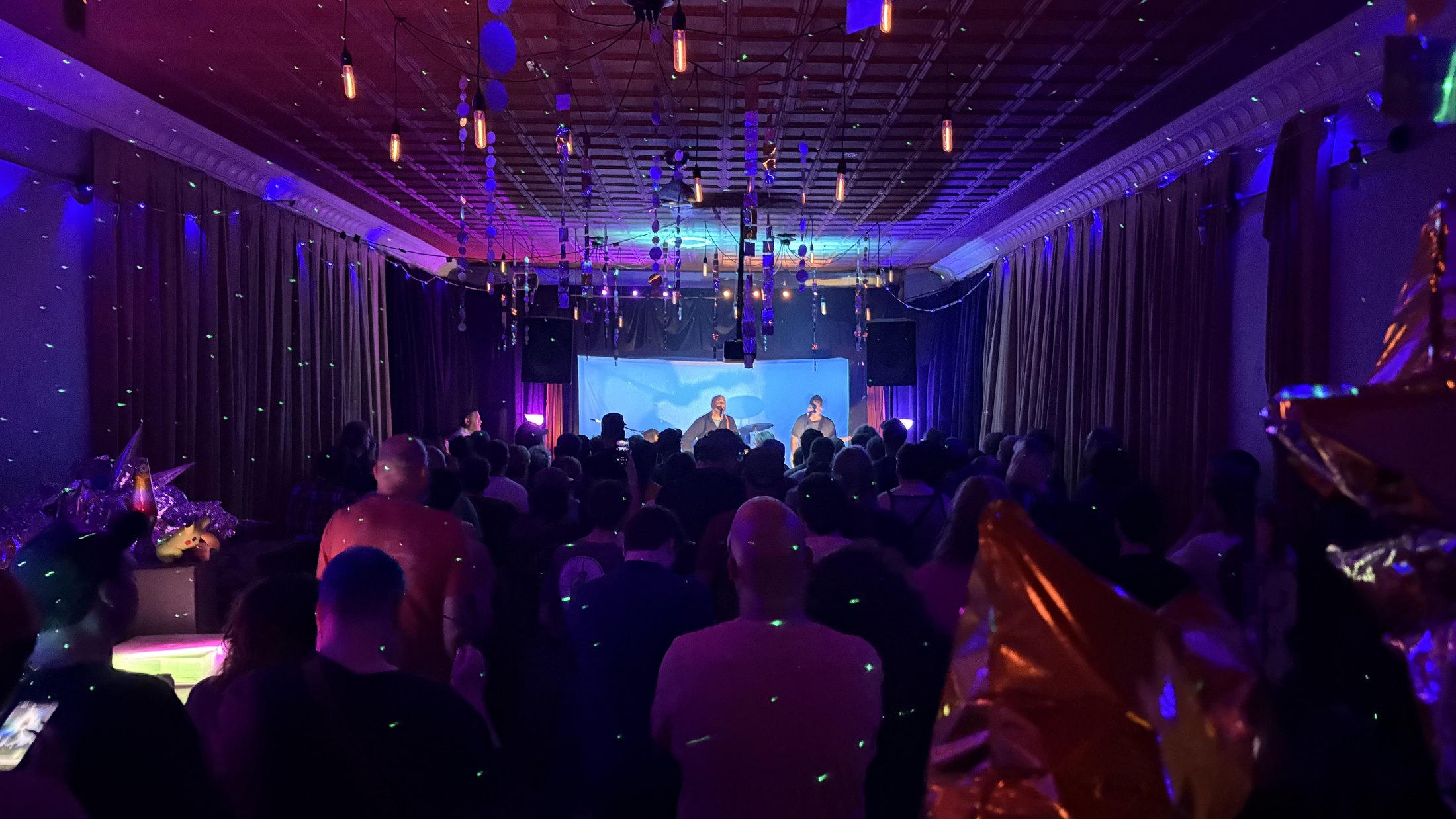
I want to serve daytime customers, people attending performances and evening visitors coming for the food and atmosphere. A seasonal patio would create another reason to stop on the walking mall. Our existing arts audience gives the restaurant a recurring customer opportunity from the outset.
My planning case uses 60 guests per show, five public shows weekly, a $15 ticket, $10 drink spend averaged across all attendees, $15 meals and $6 snacks. I plan window ordering and pickup for food and drinks, with customers choosing their own seating.
I own 100% of Arcadian Club, LLC, doing business as Glow Hall. The premises are leased. Hospitality opening depends on a workable lease, approved premises, licensing, equipment quotes and an adequately funded monthly cash plan.
Prepared October 14, 2026. Licensed occupancy is unconfirmed; 175 is planning room capacity. Future figures are illustrations, not measured demand or promised investor returns.
Capital for opening and runway.
I would commit hospitality funds only against confirmed premises, approvals, costs and an opening cash forecast.
| Hospitality use | Planning amount |
|---|---|
| Equipment, tax, delivery, supplies and connections | $15,778.03 |
| Reviews, coverage, training, inventory and contingency | $7,500.00 |
| Conditional licensing allowance | $25,000.00 |
| Opening operating reserve | $85,000.00 |
| Total additional hospitality budget | $133,278.03 |
The $85,000 reserve
The conservative cafe/rental opening ramp, with my $500/week gross working pay and 16% cost allowance included, reaches a $73,334 cumulative cash loss. A $10,000 cushion, rounded up to $5,000, gives the $85,000 reserve. This is a cash-planning allowance, not a guarantee of sufficient runway.
| How this fits the broader package | Amount |
|---|---|
| Standalone manager trial + hospitality budget | $168,278.03 |
| Separate venue preservation | $20,000.00 |
| My 26-week prelaunch pay and 16% allowance | $15,080.00 |
| Additional general operating reserve | $6,641.97 |
| Full partnership planning package | $210,000.00 |
The broader package stages hospitality at $135,000: this $133,278.03 budget plus $1,721.97 of general reserve. These are allocations within the same package, not extra amounts to add again. The expanded five-night food, drink and patio operation needs its own monthly opening forecast before release; the reserve is not reduced based on full-year sales illustrations.
Licensing and setup are allowances rather than current binding quotes. Education startup, classroom work and any further buildout remain separately priced and funded.
Several reasons to visit.
The cafe can serve show customers and a separate evening customer base, alongside daytime business.
| Full operating-year sales illustration | Amount |
|---|---|
| Daytime cafe: $690/day for 250 days | $172,500 |
| Tickets: 60 paid guests x $15 x 260 shows | $234,000 |
| Event drinks: $10 per attendee | $156,000 |
| Show meals: 25% x 60 guests x $15 x 260 | $58,500 |
| Show snacks: 50% x 60 guests x $6 x 260 | $46,800 |
| Additional evening / patio customers | $194,040 |
| Total modeled business sales | $861,840 |
The ticket total includes money paid to artists; it is not retained venue income. Meal and snack counts describe separate purchases, which may come from the same customer. Included meal items are not counted again as snacks. All sales exclude tax and tips.
April through November on the walking mall
My walk-in expectation is 20 to 40 customers on ordinary days, with busier weekends closer to 100. The model uses 30 ordinary-day and 75 weekend customers across 35 patio-season weeks, then 20 and 40 across 17 winter weeks. Three ordinary days and two weekend days each week produce 10,780 additional annual visits.
An $18 average food-and-drink check gives $194,040. The check and seasonal schedule are planning estimates. These customers exclude show attendees and daytime cafe sales. Festival premiums, private events, education, grants and separately added social-district transactions are excluded.
I plan to seek eligible Central Commons service with city approval and a Michigan Social District Permit. Approved-container sales would occur within the licensed premises for consumption in the designated commons. Patio service requires its applicable approvals.
Sales after the costs of delivery.
I include staff, product costs, artist shares, venue overhead, marketing management and my working pay in the expanded case.
| Full-year operating illustration | Amount |
|---|---|
| Modeled business sales | $861,840 |
| Artist share, ticket fees and other ticket costs | ($179,400) |
| Event drink stock, waste and processing | ($59,280) |
| Daytime cafe direct costs | ($60,375) |
| Evening food / non-show direct costs | ($119,736) |
| Cafe, crew, bar and added window-service labor | ($180,180) |
| Manager fixed cost including marketing and tools | ($43,376) |
| Core venue, hospitality and added overhead | ($74,120) |
| My $500/week gross pay + 16% allowance | ($30,160) |
| Illustrative operating result after my pay | $115,213 |
Self-service staffing
Daytime cafe labor retains 13 paid staff-hours per day at $22 loaded for 250 days. Shows include five crew hours and six bar hours at that rate for 260 shows. Window service adds eight staff-hours per day: six for food preparation and fulfillment, plus two averaged across days for peak coverage, restocking and cleanup. I would test the menu and service capacity against those allowances.
Daytime direct costs are 35%; event drinks use 35% stock/waste plus 3% processing. Added evening food and walk-in sales use a 40% product, waste, packaging and selling-cost allowance. These are estimates requiring supplier costing. Core venue and overhead include $3,635/month venue costs, $25/show hospitality, $1,500/month added hospitality overhead and $6,000 extra annual overhead.
The range of possible results.
I want capital decisions to reflect demand, menu economics, service capacity and the cash required to open.
| Expanded scenario at 60 show guests | Annual operating result |
|---|---|
| Base seasonal demand and cost allowances | $115,213 |
| Direct costs +5 points and added labor +4 hours/day | $77,366 |
| 20 ordinary-day / 40 weekend customers all year | $77,413 |
| Lower walk-in demand plus both cost increases | $42,716 |
The cost sensitivity applies to additional evening food and walk-in business. Four added staff-hours daily cost $22,880 annually; five direct-cost percentage points cost $14,967 at base incremental sales. In the lower walk-in case, all other assumptions, including 60 show guests and show food purchases, remain unchanged. The table does not cover every downside combination.
A separate cafe/rental opening comparison
The older cafe/rental illustration excludes the expanded five-show evening food-and-drink program. After my pay it shows annual results of ($105,458), ($42,325) and $19,383 in downside, developing and established cases. That limited comparison supplies the conservative reserve basis; it is a separate model, not income to add to the expanded result.
Restricted support, refunds, inventory timing, lease obligations and opening delays affect usable cash. No education enrollment or festival windfall is assumed. I would not promise a recovery date based on these full-year illustrations.
A hospitality partnership with a defined role.
I welcome a partner who can bring capital, commercial oversight and practical hospitality experience to this expansion.
My role and your role
I would lead creative direction, programming relationships and the agreed venue duties. You could take an advisory role or a defined responsibility in hospitality development, financial oversight, purchasing or operating systems. Paid work, hours and authority would be documented separately and included in the budget.
Investment structure
I am open to a documented loan or negotiated ownership in the operating company. For a standalone hospitality investment, we would agree the amount, investment price, ownership or debt terms, decision rights, reporting and exit before funding. This $133,278.03 stage does not automatically carry a fixed ownership percentage.
The separate full $210,000 partnership proposal offers 49% ownership at full funding, with interests issued for funded capital. It proposes 100% of eligible distribution cash toward new-investor capital recovery, then my verified financing balance, followed by ownership-based distributions. I am open to agreeing a corresponding structure for this stage. Operating pay, obligations, taxes, reserves and creditor rights take precedence; recovery is not guaranteed.
Before opening commitments
I would provide company and ownership records, reconciled cash and financing balances, the written lease position, equipment and menu costs, licensing status, premises plans and a monthly opening forecast. We would approve staged release conditions, the reserve and a service plan, then document the agreement with counsel and our accountant.
Source basis
My corrected October 13 financial plan, pp. 15-19; conservative opening cash model; October 14 Investment & Working Partnership Proposal, pp. 4 and 6-10; owner-confirmed prices, 60 show guests, April-November patio and window service. Seasonal counts, check and staffing are planning estimates.
Full investment partnership | Detailed financial history | Central Commons rules | Michigan Social District requirements