LONG LIVE GLOW HALL
A partner in the
next chapter.
Investment & Working Partnership Proposal
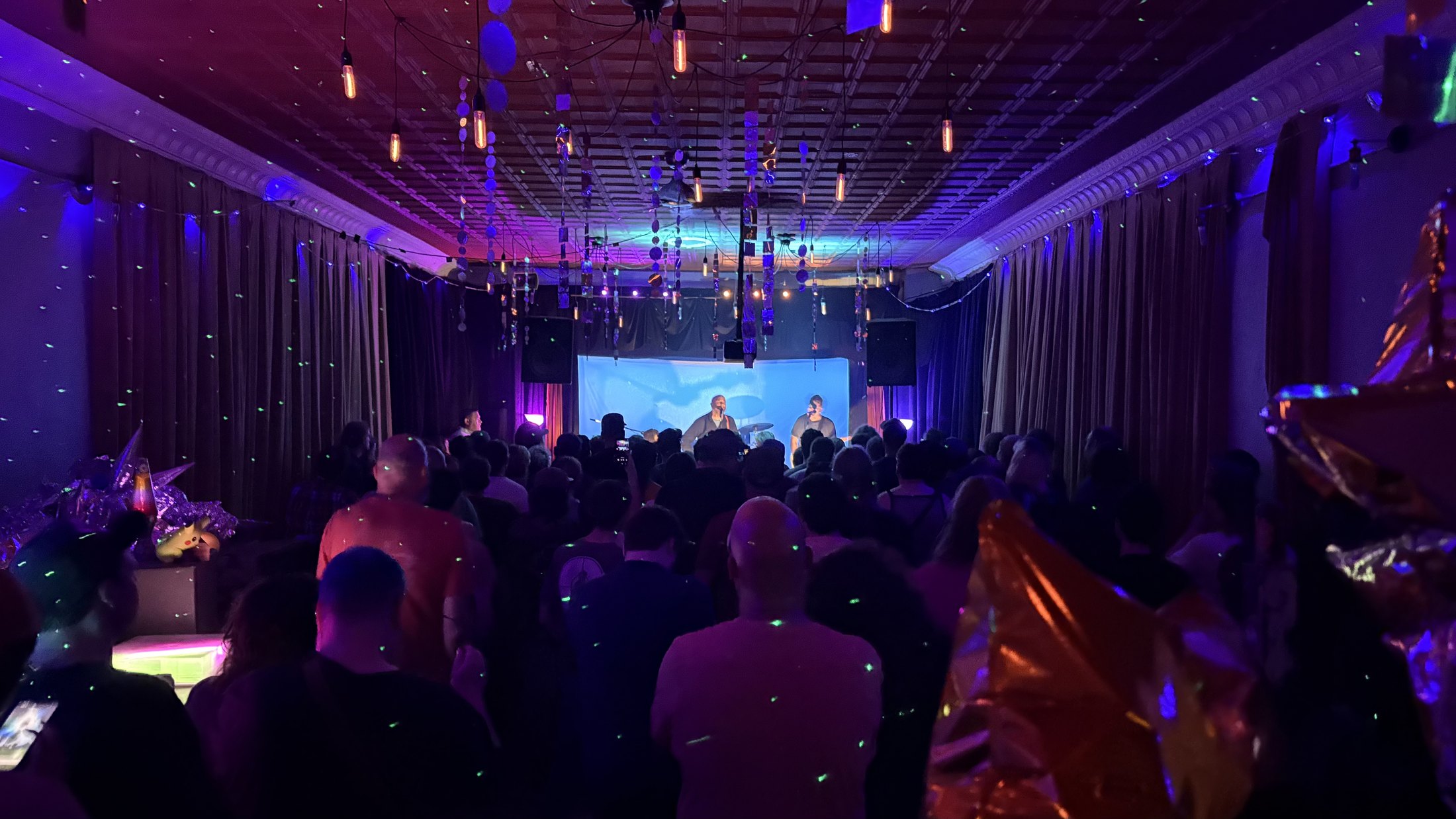
I am seeking a partner to expand Glow Hall with a cafe and licensed beer-and-wine service. We already bring people together for live performances. I want to turn more of each visit into revenue while building a durable arts and hospitality business.
| Capital commitment | Ownership at full funding | My working pay |
|---|---|---|
| Up to $210,000 | Proposed 49% | $500/week gross |
I bring an operating venue, programming relationships and an existing customer community. I am proposing ownership, priority capital recovery and a commercial role for a partner who wants to help develop this opportunity.
The proposed terms are nonbinding and subject to due diligence and signed agreements. The investment price is open to negotiation and is not a valuation appraisal.
Operating entity: I own 100% of Arcadian Club, LLC, doing business as Glow Hall. Your investment would be in the operating business; our premises are leased. We would review registration, governing documents and authority to issue ownership interests before closing.
Investment & Working Partnership Proposal | October 14, 2026
An audience already in the room.
I want our cafe and tavern to serve the arts community already visiting Glow Hall, alongside daytime diners and new customers.
Programming brings people through the door. Our music and other events give customers a reason to visit. I see an opportunity to serve guests before, during and after shows, with marketing directed to people who already know Glow Hall.
More revenue from each visit. We share ticket revenue with artists. Beverage sales would create a separate contribution after stock, payment fees and bar labor. Food offers another purchase occasion, supported by an appropriate menu and staffing plan.
An existing venue supports the expansion. Our location, performance space, atmosphere, sound and lighting already support events. I want to build hospitality around that setting and customer community. Kitchen work, approvals and equipment still require confirmed costs.
A smaller capital target than historical startup benchmarks
| Project / benchmark | Amount |
|---|---|
| Proposed Glow Hall partnership package | $210,000 |
| 2018 restaurant startup median, all respondents | $375,000 |
| 2018 median, remodel of non-restaurant space | $425,500 |
| 2018 median, new construction excluding real estate | $650,000 |
RestaurantOwner.com surveyed more than 350 independent owners. These are historical startup costs, not current loan averages or like-for-like quotes. Glow Hall's package includes preservation, a manager trial, founder work and operating reserves. Its final cost depends on the selected hospitality scope, premises permissions, equipment and licensing.
Source: RestaurantOwner.com 2018 survey announcement, November 15, 2018
What I am offering.
I propose a capital partnership with ownership, financial oversight and an agreed role in developing the business.
| Proposed term | My proposal |
|---|---|
| Ownership | You would hold 49% at the full $210,000 investment; I would retain 51%. Your investment goes into the company. |
| Staged investment | Interests are issued for funded capital. Interim ownership, rights and price per unit are documented before the first payment. The full 49% applies only at full funding. |
| Priority capital recovery | I propose that 100% of cash eligible for distribution goes to recovery of your funded capital until that capital has been recovered. |
| My prior financing | I propose to defer repayment of my verified financing balance until your funded capital is recovered. My verified balance would then be repaid before ordinary profit distributions. |
| Ongoing participation | After both recovery stages, eligible profit distributions would follow ownership: 49% to you and 51% to me at full funding. |
| Information and oversight | I would provide monthly management accounts, bank reconciliation, a rolling cash forecast and budget-to-actual results. We would review these monthly and approve major decisions together. |
| Transfer and exit | We would agree transfer restrictions, a fair valuation method and an exit process. Any buyout would require agreed terms and available funding. |
You would keep your agreed ownership after capital recovery. Our agreements would document distribution accounting and tax treatment so the same payment is not credited twice.
Capital with a purpose.
I propose to fund preservation, my working role and hospitality with an opening operating reserve.
| Use | Planning amount |
|---|---|
| Venue preservation, including $5,880.20 reserve | $20,000.00 |
| Six-month standalone manager trial | $35,000.00 |
| Cafe/tavern startup excluding opening reserve | $48,278.03 |
| Cafe opening operating reserve | $85,000.00 |
| My 26-week working pay at $500/week | $13,000.00 |
| 16% planning allowance on that working pay | $2,080.00 |
| Additional operating reserve | $6,641.97 |
| Total proposed funding capacity | $210,000.00 |
The $85,000 cafe reserve uses the conservative cafe/rental opening ramp, including $26,000 yearly founder pay plus a 16% cost allowance. Its $73,334 peak cash loss plus a $10,000 cushion, rounded up to $5,000, produces this reserve. The five-night schedule needs its own dated opening cash plan before funding. The 16% allowance is a planning assumption.
Three proposed releases
| Release | Amount | Condition |
|---|---|---|
| 1. Stabilize | $20,000 | Current cash, ownership, obligations and a workable written lease position confirmed. |
| 2. Build the operation | $55,000 | An agreed work plan covering the manager trial, 26 weeks of my pay and $4,920 of additional reserve. |
| 3. Open hospitality | $135,000 | Approvals, quotes, monthly cash plan and full opening budget confirmed. Includes $1,721.97 additional reserve. |
Before closing, I would reconcile campaign receipts and payments against this budget so each cost is funded once. Restricted gifts retain their permitted uses. Our agreement would set release conditions, dates and the outcome if expansion does not proceed.
A clear role for each partner.
I want us to agree separately on capital, pay for work and decision authority.
| My role / venue lead | Your role / capital partner |
|---|---|
| I would lead creative direction, programming relationships, community partnerships and the agreed venue duties. I would manage routine operations within our approved budget. | You would contribute financial and commercial oversight, introductions and monthly performance review, with a meaningful voice in capital spending, business planning and major commitments. |
| I propose a funded 26-week initial role at $500/week gross. The cafe opening plan also budgets that rate for its first 52 operating weeks; continuation depends on funded operations and review. | We could agree an advisory role or a defined operating responsibility, such as finance, private-event sales or hospitality development. Hours, authority and deliverables would be agreed in writing. |
Paid operating responsibilities
For a paid operating role, we would agree duties, compensation, budget and performance measures in a separate work agreement. Additional pay would be included in the financial plan before commitment. The present budget funds the manager and cafe staff separately.
Shared approval for major decisions
I propose joint written approval for new borrowing or ownership, related-party payments, distributions, material capital spending, changes to my pay or duties, a new or surrendered lease, discretionary closure and changes to the capital-recovery order.
Continuity and accountability
My working role would have a separate agreement. I propose joint approval for removal without cause or changes to the agreed role, with defined cause, notice, a cure opportunity where appropriate and independent dispute resolution. We would also agree a response to legally required action, immediate safety needs or an inability to fund operations.
We would set spending thresholds and a cash floor from the approved monthly forecast, then review before each funded period ends. If pilot and cafe periods overlap, my compensation is counted once and unused funds remain available for approved operating needs.
Alcohol sales change the economics.
Five public shows a week create a separate evening beverage opportunity alongside daytime cafe sales.
My first-year attendance assumption: 60 guests per show. My full-year operating illustration uses five public shows weekly for 52 weeks, a $15 ticket and $10 average drink spend across all attendees. Planning capacity is 175; licensed occupancy and the full event schedule require confirmation.
| Attendance case | 40 / lower | 60 / base | 75 / growth |
|---|---|---|---|
| Evening drink sales | $104,000 | $156,000 | $195,000 |
| Drinks after stock, fees and bar labor | $30,160 | $62,400 | $86,580 |
| Modeled result after my pay | ($63,071) | ($12,631) | $25,199 |
40 is a downside sensitivity; 75 is a growth illustration. The first-year base is 60. Drink contribution deducts 35% stock/waste, 3% processing and one dedicated bar staff member for six paid hours per show at $22/hour. Staffing and product costs are planning assumptions. Drink contribution still funds shared business costs.
This case includes daytime cafe sales of $690/day for 250 days, 35% cafe direct costs, 13 paid cafe staff-hours/day at $22, 70% artist share of tickets, ticket fees, show crew, artist hospitality, venue overhead, a growth manager, added hospitality overhead and $30,160 yearly founder pay/cost allowance. Additional evening meals, snacks and non-show evening or patio customers are excluded, along with private events, education and grants.
A practical route to operating break-even
At 60 guests, the $10 drink-spend case is short by $12,631 a year, about $1,053 monthly. Holding other assumptions fixed, average drink spend of about $11.31 covers modeled operating costs and founder pay. At $12, the annual result is $6,713 before further cash requirements.
The 35% stock/waste allowance also needs supplier-based costing. At 60 guests, a 25% allowance adds $15,600 to annual contribution and gives a $2,969 operating result at $10 spend. This is a cost sensitivity, not a measured beverage margin. These two examples change one input at a time.
Results exclude income taxes, debt service, depreciation, additional capital replacement and reserve replenishment. Opening losses and ramp-up extend recovery; lower attendance can require more cash. These are alternative operating scenarios, not amounts to add to historical income or the cafe/rental cases.
Food sales around every show.
I see the existing audience as a recurring customer base for a restaurant, with meals and snacks alongside event drinks.
I plan around 60 guests per show, five shows weekly and 260 shows in a full operating year. My food assumptions are 25% buying a $15 meal and 50% buying a $6 snack. Prices and checks throughout these illustrations exclude sales tax and tips.
| Show food assumption | Per show | Annual sales |
|---|---|---|
| 15 meals at $15 | $225 | $58,500 |
| 30 snacks at $6 | $180 | $46,800 |
| Total additional show food | $405 | $105,300 |
The snack figure assumes 30 separately purchased snack items in addition to 15 meal orders. Some customers may buy both; the counts describe purchases, not 45 unique diners. Items included in a meal are not counted again as snack sales. If meals replace snack orders, food revenue would be lower.
A stronger hospitality check
Show food averages $6.75 across all attendees. Added to the existing $10 average drink spend, the illustration produces $16.75 in food and drink sales per attendee, or $261,300 annually across show customers. Ticket sales are separate. These are sales before product costs, staffing and other expenses.
Multiple drinks and customer choice
I expect more than half of attendees to purchase multiple drinks. I retain $10 average drink spend across all guests in the financial case, including non-buyers. Stronger beverage sales are possible, but I would measure purchase rates and average checks before relying on a higher figure.
These purchase rates are my planning expectations, not measured results. Annual sales assume the full schedule operates throughout the year. Product pricing, menu capacity and sales capture would be tested during opening; the cash forecast must reflect ramp-up.
A destination beyond the show.
I plan self-service window ordering for meals, snacks and drinks, with customers collecting their orders and choosing their own seating.
Walk-in and patio demand
My expectation is 20 to 40 additional customers on ordinary days, with weekends closer to 100 and some festivals bringing heavier traffic. For the base illustration, I use a lower seasonal schedule: 30 ordinary-day and 75 weekend customers during patio season, then 20 and 40 respectively in winter. These are incremental evening customers, excluding show attendees and daytime cafe business.
| Season / service schedule | Customers / week | Annual visits |
|---|---|---|
| April-November: 35 weeks; 3 ordinary + 2 weekend days | 240 | 8,400 |
| December-March: 17 weeks; same 5-day schedule | 140 | 2,380 |
| Full-year additional customers | 10,780 |
I use an $18 average food-and-drink check across these visits, producing $194,040 in annual sales. The check is a planning estimate for a mix of meal customers, snack buyers and drink-only visits, not an established average. The 35/17-week split approximates the April-November patio season; weather and opening dates will affect actual service.
Summer on the walking mall
I see the patio as a strong draw for downtown foot traffic from April through November. Festivals next door could add busy weekends, but no festival premium is included in this case. Winter customers are assumed to be served indoors. Window ordering and pickup would keep service simple without a table-service staffing model. Seasonal staffing, weather and shared room capacity would be managed around performances.
Central Commons service
I plan to pursue Central Commons beverage service, subject to premises eligibility, city approval and a Michigan Social District Permit. Customers could then purchase permitted drinks at Glow Hall for consumption within the designated commons in approved containers. Window sales would take place within the approved licensed premises. Patio service requires applicable outdoor-service approvals. No separate social-district sales are added to this forecast.
Service basis: City of Kalamazoo: Central Commons | Michigan MLCC: Social District requirements. Rules reviewed October 14, 2026.
The expanded hospitality case.
I want the investment evaluated against food and non-show customers as well as tickets and event drinks, with the additional costs included.
| Full operating-year illustration | Amount |
|---|---|
| Ticket, event-drink and daytime cafe result after my pay (page 6) | ($12,631) |
| Additional show food sales (page 7) | $105,300 |
| Additional evening / patio customer sales (page 8) | $194,040 |
| Total additional hospitality sales | $299,340 |
| 40% product, waste, packaging and selling-cost allowance | ($119,736) |
| Added food preparation / window-service labor | ($45,760) |
| Added annual overhead allowance | ($6,000) |
| Illustrative operating result after my pay | $115,213 |
The 40% allowance covers ingredients, drink stock, waste, packaging and payment fees. My window-service planning allowance is eight additional staff-hours daily at $22 loaded for 260 days: six for food preparation and order fulfillment, plus two on average for peak coverage, restocking and cleanup. Page 6 already includes cafe staff, event crew and six evening bar hours. I would test menu and service capacity against this staffing allowance. Added overhead remains $6,000 annually.
The result depends on execution
Five additional direct-cost percentage points reduce the result by $14,967; four extra staff-hours daily reduce it by $22,880. Together they leave $77,366. At 20 ordinary-day and 40 weekend customers year-round, with an $18 check, the original cost allowances give $77,413. Combining that lower demand with both cost increases leaves $42,716 before further cash requirements.
All new volumes, checks and cost allowances are planning assumptions. No extra festival, private-event, education or grant income is included. Income taxes, financing, capital replacement and reserve replenishment remain outside operating results. Investor distributions require lawful available cash. I would validate a monthly opening and seasonal cash forecast before confirming funding releases or changing the reserve.
A conservative case and history.
The cafe/rental comparison provides a separate view of risk alongside the five-night show-and-hospitality opportunity.
| Full operating-year illustration | Downside | Developing | Established |
|---|---|---|---|
| Cafe/rentals after existing paid roles | ($75,298) | ($12,165) | $49,543 |
| My work + 16% allowance | ($30,160) | ($30,160) | ($30,160) |
| Result after my proposed pay | ($105,458) | ($42,325) | $19,383 |
Cases are illustrative, not measured demand. They include the existing venue gap, cafe staffing and manager costs, but exclude financing payments, income taxes, depreciation and additional capital replacement. Education income is excluded; enrollment is unconfirmed.
Capital recovery under this separate case
If the full $19,383 annual result were available for capital recovery, $210,000 would take about 10.8 years at a sustained operating level. This cafe/rental case does not include the five-night event schedule shown on page 6. Taxes, reserve replenishment, capital needs and opening losses can extend recovery. The weaker cases need operating cash.
After recovery of both capital balances, 49% of that same operating illustration is about $9,498 a year before further cash requirements. This is arithmetic, not a promised annual payment or return.
The historical position
Q3 2026 income was $16,113.22 against $19,720.20 in costs including artist reserve: a $3,606.98 shortfall, or $1,202.33 per month. Income includes $3,372 in estimated cash receipts. Excluding those estimates, income covered 64.61% of costs.
Through October 9, I contributed $38,128.11, received $12,041.39 in repayments and had $26,086.72 outstanding. I would provide a reconciled current cash and financing position before closing. Glow Hall had no artist payments outstanding as of October 13.
Let's build the agreement together.
I welcome a conversation about the capital, experience and commercial contribution you would bring to Glow Hall.
1. Entity and ownership. I would provide formation and registration records, the ownership ledger, existing agreements, tax status and details of the assets the business owns or uses. We would confirm authority to issue interests.
2. Cash and the lease. I would provide a dated, reconciled bank balance, unpaid bills, my financing and compensation records, and the landlord's written lease/payment position. Historical obligations would be checked against subsequent payments.
3. Commercial plan. We would agree responsibilities, my working role, opening milestones, a monthly cash forecast, reserves and measurable demand tests. Licensing, premises permissions, costs and timing would be confirmed before hospitality funding.
4. Investment terms. We would agree the commitment, unit price, ownership at each funded stage, release conditions, reporting, decision rights, capital recovery, my prior financing, transfers, exit and a deadlock process.
5. Documentation and funding. Our counsel and accountant would document the agreed terms through the company's governing documents, investment agreement and work agreements, using the appropriate offering route before accepting funds.
Debt financing
I am also open to a loan if the cash plan supports debt service. We would agree interest, maturity, payments, security, any guarantees and creditor priority. My current operating gap does not support a fixed repayment promise; loan terms would require a separate agreement.
Your role in Glow Hall's next chapter
I would like to understand the amount you would consider, your preference for advisory oversight or an operating role, and the performance you would need to justify the investment. My aim is an agreement that supports my working income, protects Glow Hall's creative purpose and gives you a clear financial stake.
Contact: admin@theglowhall.com
Financial basis
My October 13 Financial and Operating Plan, pp. 2, 9, 10, 12, 13, 17-19; opening cash and five-night cafe/tavern models. October 14 hospitality assumptions and estimates appear on pages 7-9. Historical records cut off October 9, 2026. Ownership, pay, preferences and funding stages are proposed terms.
Detailed Glow Hall financial plan | SEC: investment structures and involvement | SEC: offering pathways